Introduction
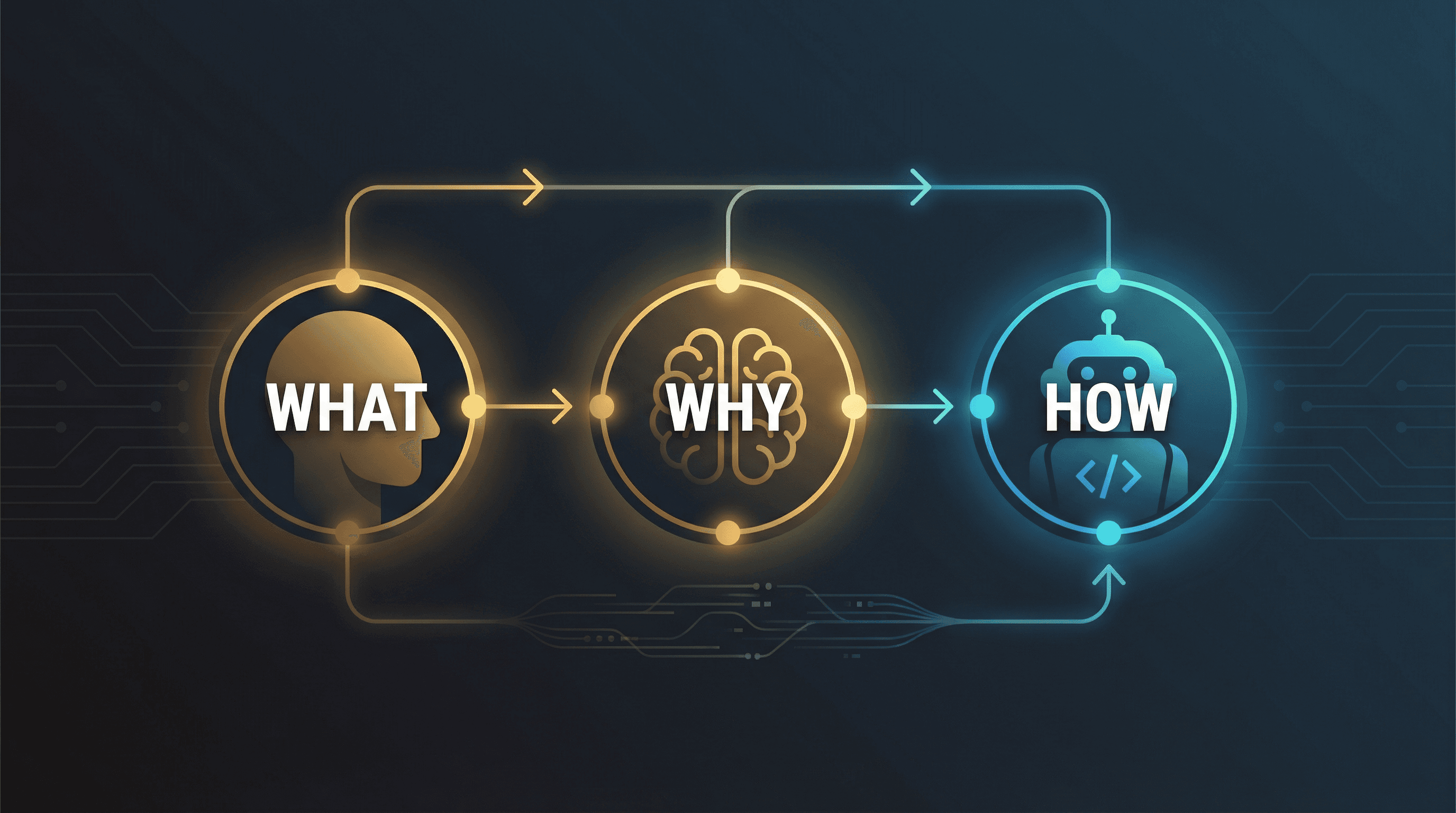
Some engineers feel irreplaceable while others worry about being replaced. The difference often comes down to how they learn. Not how much they know, but the order in which they learn it. This article explains a simple but powerful learning order — What → Why → How — and why it matters more than ever in the age of AI. If you want to stay ahead of the tools that are changing how we build software, this is the mindset that separates those who thrive from those who get left behind. See also how AI tools amplify developer quality.
Beyond the How
Most engineers jump straight to how: how to use the tool, how to write the code, how to configure the system. They rarely spend time on what it does or why it exists. They know the mechanics but not the purpose—not even for a specific tool or a single function.
AI is especially strong at the how. Given a clear problem, it can implement common, repeatable patterns quickly. That's why engineers who only know the how are exposed: AI can do that work too.
The engineers who stay valuable follow a different sequence: first what, then why, then how. Before opening documentation or writing code, they ask:
- 🔥 What problem does this solve?
- 🔥 Why does this solution exist?
- 🔥 What did people do before, and what was wrong with it?
Answering these questions first makes the how easier to learn and retain. More importantly, it builds the kind of understanding that AI can't replace.
Understanding problems is usually harder than implementing solutions. That's where human value sits. Companies care most about engineers who can frame problems, explain trade-offs, and decide when something is worth building. AI can draft implementations; it still can't own that judgment.
AI can build good things, but it doesn't have taste — the human kind of aesthetic and intuitive judgment, the deeper vision and wisdom that comes from experience. Knowing when something feels right,looks right, when a solution fits the context, when to simplify or when to push further—that requires understanding and wisdom AI doesn't yet have.
Conclusion
Before diving into any new tech—especially AI—spend more time on what and why than on how. That order turns you into the engineer companies want to keep, and the one AI is least able to replace.
Your edge is not in typing code or memorizing syntax. It's in knowing which problems matter, why they exist, and when a solution is good enough—or when it needs to be pushed further. Cultivate that understanding and use AI for what it does best: the how. Explore more mindset and developer career articles.