Introduction
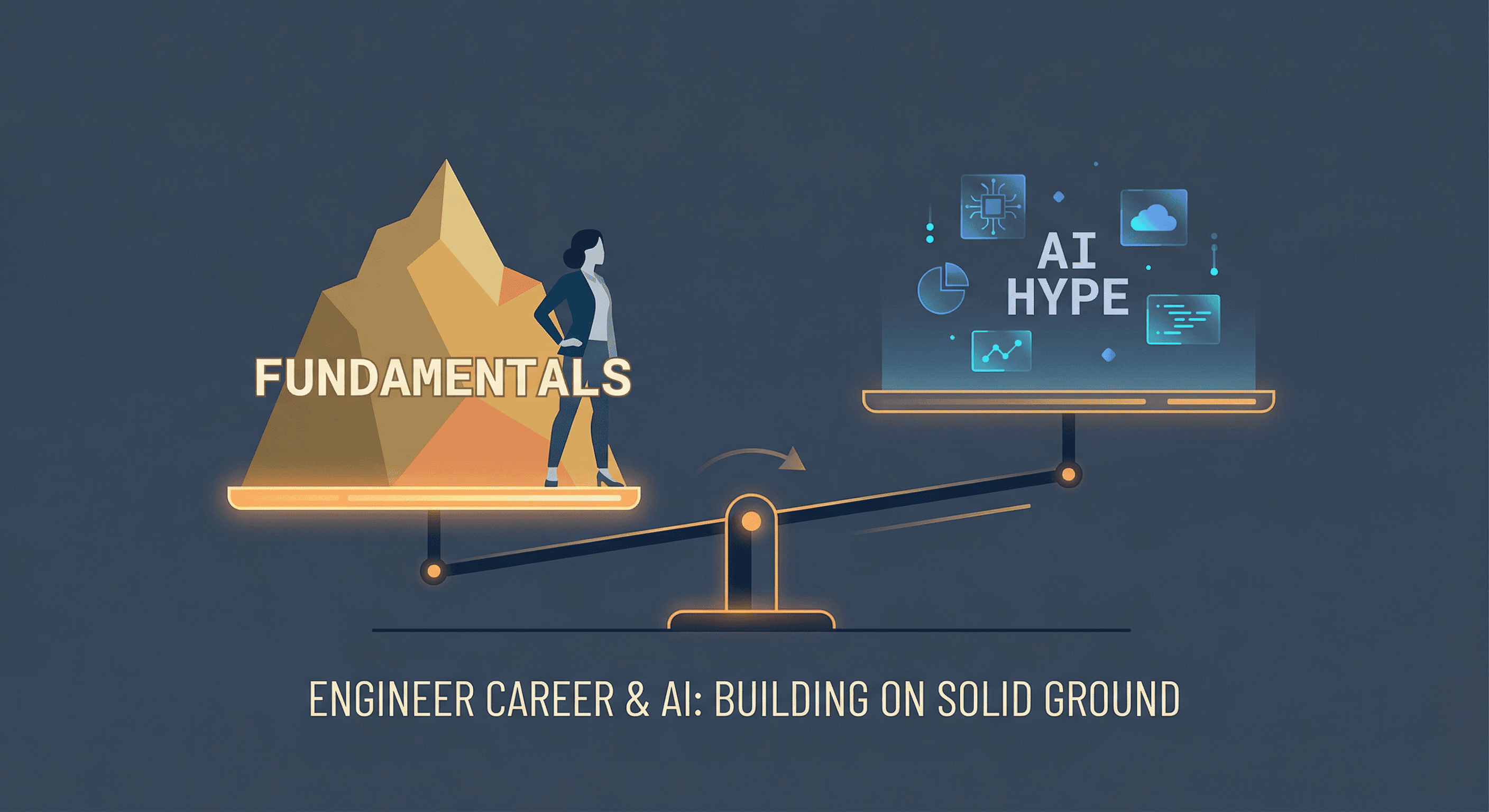
Many engineers feel pressured to become AI experts overnight. They rush to learn AI platforms and tools, often skipping the basics and fundamentals because that's where the trend seems to be going. But that's not what the industry needs. It's not what companies are looking for.
The real shift: the question isn't whether AI will replace you. It's whether you're making the choices that keep you valuable. See also The What → The Why → The How.
What the Industry Actually Wants
Look at job descriptions for DevOps engineers and cloud engineers. Notice how few of them mention AI tools or platforms. That's telling. What companies actually need are engineers who understand the fundamentals, who can integrate AI where it makes sense—and who can tell them when AI is not the solution for a specific task.
That skill—understanding the basics, the systems, and being able to make those decisions—doesn't get replaced by AI. It becomes more valuable because there are more decisions to make. Knowing when to use AI and when to avoid it is a judgment call that still belongs to humans.
You Have Control
The most important perspective shift: you have control. You decide how to use AI, what skills to build, and where to focus your energy. Whether it's AI, Kubernetes, or the next technology, the question isn't whether the tool will replace you. It's whether you're making choices that keep you valuable.
Are you improving? Are you searching for opportunities? Or are you stuck doing the same thing you did five years ago, waiting for the next wave to decide your fate? A simple reframe: do you release a new version of yourself every year?
AI Amplifies What You Bring - What Are You Bringing ?
AI is a tool—a powerful one, but still a tool. Like any tool, it amplifies what you bring to it. If you only know how to write code, AI makes you less valuable because it can write code too. But if you understand problems, communicate with people, and make good decisions about architecture and trade-offs, AI makes you more powerful. It handles the repetitive parts while you focus on the hard problems.
The engineers who will thrive in the next decade aren't competing with AI on code or config scripts. They use AI to write code faster so they can spend more time on what matters: understanding business value, talking to users, designing systems that solve real problems, finding bottlenecks, and making decisions that require context and experience. They're constantly learning. They're curious instead of anxious. They build things they want to see exist in the world.
Conclusion
Stop worrying about AI replacing you. Start thinking about how to use AI to get better at the parts of engineering that are most valuable—understanding problems, communicating, designing systems, making decisions. Keep systems simple instead of adding complexity for the sake of trendiness.
You have control. You decide how AI fits into your career instead of the other way around. That's how you build a career that lasts for decades, regardless of what technology comes next. Explore more mindset and developer career articles.